
DIY vs. Expert: When is Replacing a Broken Garage Door Spring in Surrey Too Dangerous?
DIY vs. Expert: When is Replacing a Broken Garage Door Spring in Surrey Too Dangerous?
Garage door springs pack the energy of a small car suspension and routinely lift 150–250 lb doors. When they fail, they can whiplash steel cables, bend shafts, and injure anyone in the line of fire. This Surrey-focused guide explains when a homeowner might safely take on minor spring work—and when to stop immediately and bring in a technician.
Quick take (read this first)
- Torsion springs on double-wide doors are not DIY—they store more energy and sit overhead where you can’t control recoil.
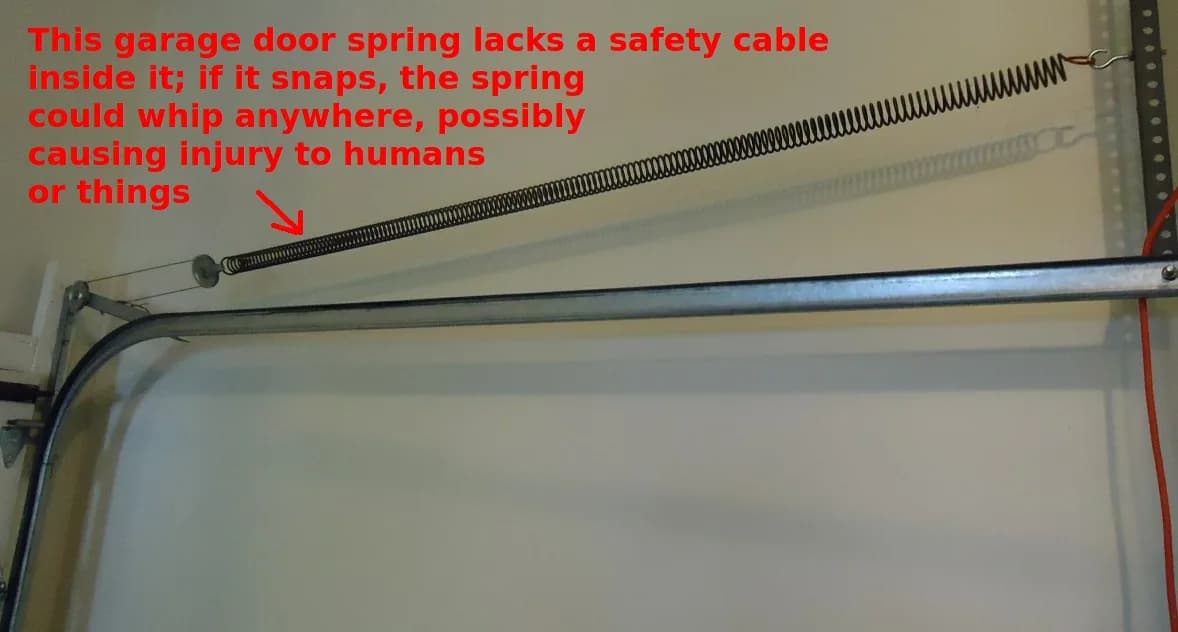
- Extension springs without safety cables are hazardous; if you see one broken in mid-span, don’t touch the door.
- If the door is stuck halfway, disconnect power and block access until a pro can secure it.
- WorkSafeBC-style lockout applies at home too: unplug the opener and pull the red release before anyone enters.
- Rain and rust in Surrey garages speed up spring fatigue—inspect yearly and replace in pairs to avoid uneven loads.
Not all springs carry the same risk
- Torsion springs (most Surrey homes): mounted on a shaft above the door. They are wound to hundreds of foot-pounds of torque and require winding bars that fit precisely. A mis-seated bar can kick back with bone-breaking force.
- Extension springs (common on older carports): mounted along the horizontal tracks. They stretch 6–10 inches under load. Without containment cables, a break can turn the spring into a projectile.
- Opener load: A 1/2 hp opener is not designed to lift a dead-weight door; forcing it after a spring break can burn out gears or bend rails.
When a Surrey homeowner might handle it (rare but possible)
Safety warning: if you don’t have matched winding bars, PPE, and a way to secure the door, skip DIY.
- Light, single-car door with extension springs that already have safety cables. You may replace both springs if the door weight is under ~120 lb and you can safely prop the door open on solid lumber stands.
- Lubrication and inspection only. Applying garage-rated lubricant to coils and pulleys is safe and can prevent a seizure until a pro arrives.
- Reconnecting an intact lift cable. If a cable slipped off a drum but the spring is unbroken and unwound, you might reseat it with the door fully open, clamped, and unplugged—though this is still risky without experience.
Clear signs it’s too dangerous to DIY
- Broken torsion spring above a double-wide (16 ft) door. The stored torque and door weight exceed safe solo handling.
- Visible shaft bend or off-center bearing plate. Indicates uneven torque; attempting to rewind can twist the shaft further.
- Frayed lift cables or bird’s-nest on the drum. Cables can snap during rewinding and whip wrists or face.
- Corroded hardware (common in coastal Surrey/Crescent Beach). Rust weakens set screws and brackets; they can shear while under load.
- Low headroom conversions with extra pulleys. Additional moving parts increase failure points and pinch zones.
- Door stuck mid-travel in cold rain. Wet tracks and swollen wood jams raise friction; forcing the opener risks derailment.
- No matching replacement springs on hand. Installing “close enough” wire size changes lift balance and can cause the opener to over-force and reverse.
How the math illustrates the hazard
- A typical 1 3/4" torsion spring wound 7.5 turns can hold 200–250 foot-pounds of torque. If a winding bar slips, that energy releases in under a second.
- Even a 10 lb extension spring stretched 8" stores about 160 inch-pounds—enough to break skin or eyes if it whips.
- A 200 lb double-wide door dropping 6" without spring support can deliver 1,200+ joules on impact—more than enough to crush fingers or dent a vehicle hood.
How Surrey technicians reduce risk
- Two-tech method on heavy doors. One tech controls the shaft while the other secures the door and cables.
- Matched winding bars and calibrated counts. Pros record turns (e.g., 7.5 on 7’ doors, 8 on 8’ doors) and check balance mid-cycle.
- Containment and blocking. We clamp tracks, add vice-grips below rollers, and use 2x4 or 4x4 cribbing to keep the door from dropping.
- Torque-rated hardware. Replacing center bearing plates, end bearing plates, and set screws if threads are damaged prevents future slippage.
- Paired spring replacement. Both springs are replaced to avoid uneven lift that strains openers and panels.
- Load testing before handoff. The door should hover mid-travel with manual lift, and opener force limits are reset to manufacturer specs.
Cost and time reality in Surrey
- DIY parts: Quality torsion springs are typically $80–$150 each when sourced locally, plus $25–$40 for cables and bearings.
- Professional service: A two-spring replacement on a double-wide door in Surrey usually ranges $320–$520 including parts, balance, and safety checks.
- Time: A pro can complete the job in 60–90 minutes. First-time DIY attempts often exceed 3–4 hours and carry higher injury and damage risk (bent shafts, cracked panels, or opener failure).
What to do the moment a spring breaks
- Stop operating the opener. Unplug it and pull the red emergency release cord.
- Secure the door. If it’s open, brace it with solid lumber stacks or locking clamps below the bottom rollers. If it’s closed, keep it closed.
- Inspect for cable damage from a safe distance. If cables are frayed or off drums, do not touch them.
- Clear the area. Keep kids, pets, and vehicles away from the door until it’s secured.
- Document model and door size. Take a photo of the spring, end bearing plates, and drum labels so a technician can bring the right parts.
- Call a local pro if any high-risk signs exist. Heavy double doors, low headroom tracks, or rusted hardware are automatic pro-only cases.
Local nuances for Surrey garages
- Moisture and salt air: Coastal neighborhoods like Crescent Beach see more corrosion; springs there often last 5–7 years versus 8–12 in drier inland areas.
- Cold snaps on the Fraser: Steel can contract and amplify existing fatigue; breaks often spike after freeze-thaw cycles.
- Strata townhomes: Many complexes in Fleetwood and Guildford have linked garages—sudden door drops can damage shared firewalls. Coordinate with the strata for access and safety.
- Power outages: BC Hydro brownouts can leave doors mid-cycle. If the spring breaks during a restart, the opener may stall—don’t force it; secure and call for service.
FAQs we hear from Surrey homeowners
- Can I lift the door manually once the spring is broken? Only if you have two adults, solid bracing, and a light single-car door. Heavy doors can free-fall; safer to leave it closed.
- Should both springs be replaced if only one snapped? Yes. The remaining spring is already near its life limit and will be imbalanced.
- Is lubrication enough? Lubrication reduces noise and surface rust but cannot fix fatigued metal. If coils are separated or gapped, replace the spring.
- Will my smart opener warranty be voided if I DIY? Many manufacturers require “professionally serviced” notes for force-limit claims. Keep invoices from a qualified tech.
- How often should Surrey homeowners inspect springs? Visually every quarter; schedule a professional balance and safety check annually, especially before winter storms.
Bottom line
If you’re looking at a broken torsion spring on a double-wide door, or any setup without safety cables, DIY crosses into “too dangerous.” Unplug the opener, block the door, and call a technician who can balance, torque, and test the system safely. If you’re unsure, we’re happy to assess and give you a go/no-go over the phone.
Ready for a safety-first repair? Our Spring Replacement service covers Surrey, Delta, Langley, and the rest of Metro Vancouver with paired springs, cable inspection, and balanced lift before we leave your driveway.